

Key Focus This Week:
This week focus: Record Highs Amid Yield Surge, Energy Risks & Q3 Earnings Kickoff
Global financial markets traded with high volatility this week, influenced by elevated U.S. Treasury yields, fluctuating energy prices, shifting inflation expectations, and the approach of the upcoming corporate earnings season. Major U.S. equity indices generally surged, with both the S&P 500 and Nasdaq Composite hitting new all-time highs during the week, reflecting ongoing support from mega-cap tech stocks and AI-related investment themes. However, long-term U.S. Treasury yields remained near multi-year highs, and ongoing Middle East tensions generated energy supply uncertainties, keeping investor concerns alive regarding a potential rebound in inflation and further monetary policy tightening.
On the economic data front, Canadian employment unexpectedly dropped by 68,300 in September, pushing the unemployment rate up from 6.4% in August to 6.5%, signaling further softening in Canada’s labor market. Following the release of the jobs report, market expectations for a near-term rate hike by the Bank of Canada cooled noticeably. In the U.S., investors continued to closely monitor the interaction between Treasury yields and inflation, awaiting the upcoming Consumer Price Index (CPI) and Producer Price Index (PPI) reports to gauge the Federal Reserve’s future policy path.
In commodity markets, geopolitical developments in the Middle East continued to impact crude oil supply expectations, causing Brent crude prices to break above $100 per barrel multiple times. Rising energy costs have heightened inflation fears, while elevated bond yields continue to exert pressure on bond prices and certain stock valuations. Overall, markets spent the week seeking a balance between tech-driven gains, economic growth uncertainties, and inflation risks, with upcoming inflation data and Q3 corporate earnings expected to dictate the next market direction.
Last Week’s Key Economic Data & News Recap
Major U.S. Stock Indices Reach New Highs Supported by Tech
U.S. equities posted broad gains this week. The S&P 500 and Nasdaq Composite extended their upward momentum early in the week, touching record highs on Tuesday. Mega-cap tech and AI-related shares showed resilience, upholding market risk sentiment. Although a midweek rebound in Treasury yields put brief pressure on stocks, the main indices bounced back to finish higher on Friday. For the week, the S&P 500 rose by approximately 1.2%, the Dow Jones Industrial Average gained about 0.9%, and the Nasdaq Composite added around 0.6%. The ability of equities to gain traction despite a high-interest-rate environment underscores investor confidence in the earnings outlook for major tech firms.
U.S. Labor Market Shows Clear Signs of Moderation, Easing Rate-Hike Expectations
The U.S. labor market was another key focus for investors this week. The ADP employment report released on September 30 showed that private-sector employment increased by 90,000 in September, while the third estimate of second-quarter GDP was revised up to an annualized growth rate of 2.2%. However, the September nonfarm payrolls report released on October 2 presented a notably weaker picture. Nonfarm payrolls increased by only 29,000, below market expectations of approximately 84,000–90,000, while the unemployment rate rose from 4.1% in August to 4.2%. Employment growth for the previous two months was also revised down by a combined 60,000 jobs. Average hourly earnings increased 0.1% month over month and 3.0% year over year. The slowdown in employment growth led markets to reassess the need for further near-term Federal Reserve tightening, resulting in a significant decline in expectations for another rate hike this year.
Treasury Yields Remain Elevated Amid Inflation and Fiscal Concerns
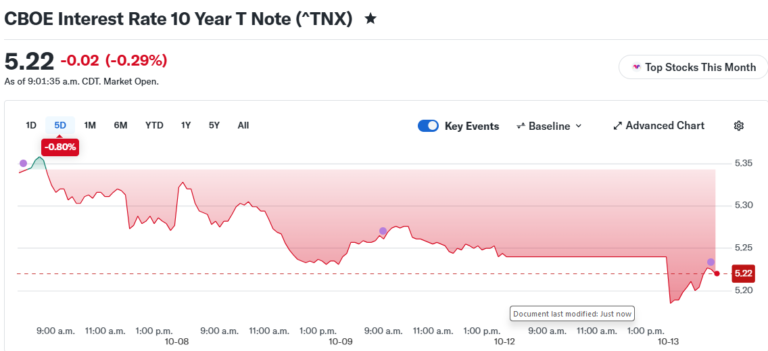
Long-term U.S. Treasury yields lingered near multi-year highs throughout the week. The 10-year U.S. Treasury yield approached 5.3% mid-week, while the 30-year yield briefly touched around 5.7%, reflecting market anxieties over persistent inflation, energy costs, and long-term fiscal expansion. Higher yields increase borrowing costs for businesses and consumers alike, prompting investors to scrutinize stock valuations relative to future profitability. Although yields eased toward the end of the week following steady demand at U.S. Treasury auctions, the 10-year yield still closed on Friday near 5.24%. The future trajectory of bond yields remains a pivotal factor for risk assets.
Unexpected Contraction in Canadian Employment Shifts Bank of Canada Expectations
Data released by Statistics Canada revealed an unexpected employment decline of 68,300 positions in September, sharply contrasting with expectations of employment growth, while the unemployment rate ticked up from 6.4% to 6.5%. The job losses were concentrated in the public sector and manufacturing. September’s employment numbers reinforced signs of a weakening Canadian labor market, tempering market expectations for a Bank of Canada rate hike at its October meeting. However, the average hourly wages for permanent employees accelerated from 2.0% in August to 2.3% year-over-year, indicating that wage and inflation pressures require continued vigilance. The interplay between labor market softness and rising energy prices complicates future monetary policy decisions for the Bank of Canada.
Middle East Tensions Drive Oil Prices Up, Prolonging Energy Inflation Risks
Ongoing tensions in the Middle East and supply risks surrounding the Strait of Hormuz continued to roil international crude oil markets. Brent crude broke above $100 per barrel multiple times this week, surging further on Thursday due to supply disruption worries. Higher energy prices increase transportation, production, and consumer costs, raising concerns that broader inflation pressures may re-emerge. Crude prices fluctuated wildly in response to geopolitical headlines and supply expectations, demonstrating how sensitive energy markets remain to regional conflicts. For equity and fixed-income markets, sustained high energy prices threaten to complicate the inflation-cooling process and prolong high interest rates.
Market Focus Shifts to Fed Minutes and Upcoming Inflation Data
Investors continued to digest policy signals from the minutes of the Federal Reserve’s September meeting. The core question for market participants is whether the Fed will need to tighten policy further given ongoing inflation risks and elevated long-term Treasury yields. Simultaneously, markets are awaiting the upcoming U.S. CPI, PPI, and retail sales reports to determine whether rising energy costs are spilling over into broader goods and services and whether consumer demand remains resilient. As the Q3 earnings season gets underway, corporate outlooks on costs, demand, and profitability will also serve as crucial market drivers.
Investing with an AimStar's investment professional
Want expert advice at every step of your investing journey?
AimStar’s investment professionals can set you on the right course – and they can meet in-person or online.

Market Performance Review – Last Week
Source: Yahoo Finance
Canadian Equities:
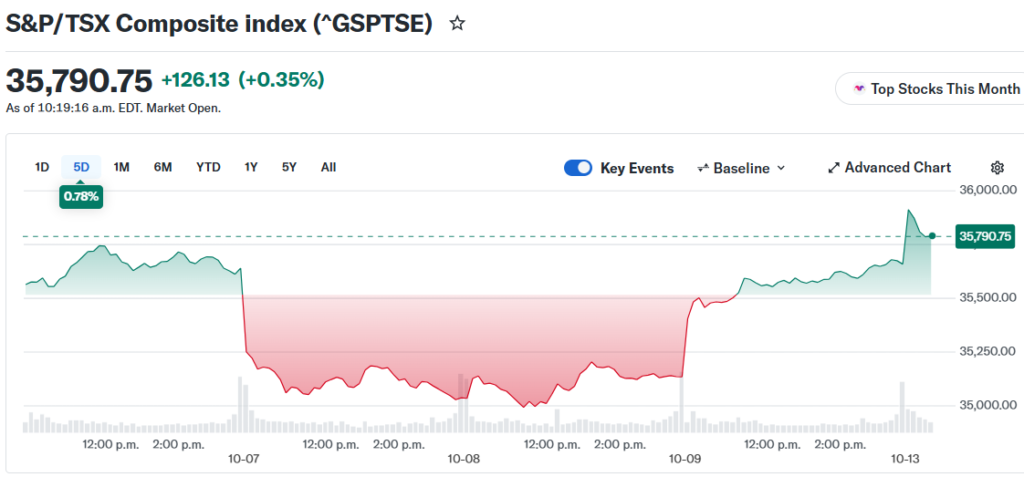
S&P/TSX Composite: Closed on Friday at 35,664.62. Canadian equities experienced volatile trading this week, pressured mid-week by rising bond yields and weakness across several sectors, before rebounding sharply on Friday with a gain of 519.24 points. Weak Canadian employment data also served as a critical reference for evaluating economic prospects and Bank of Canada policy.
Source: Yahoo Finance
U.S. Equities:
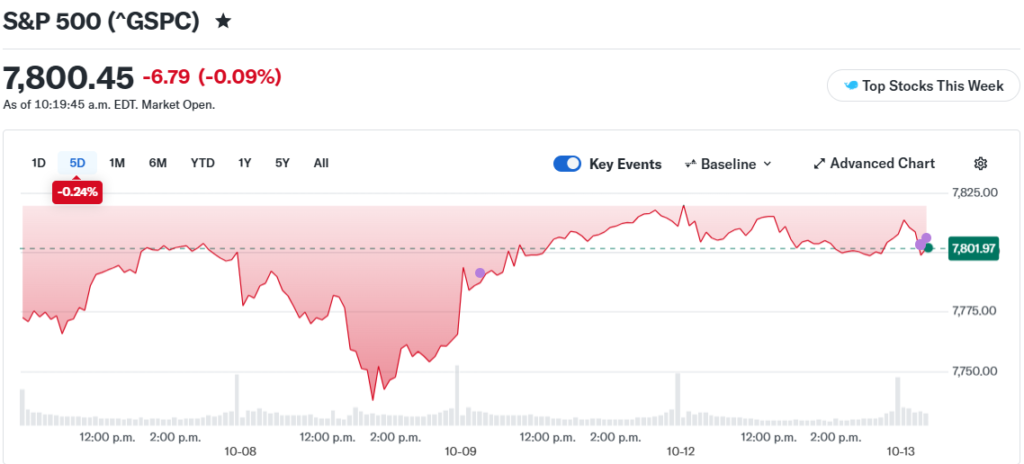
- S&P 500: Closed on Friday at 7,811.54, gaining about 1.2% for the week. Mega-cap tech stocks supported index strength, helping the S&P 500 hit a new record high early in the week. Despite pressure from rising yields and energy inflation risks, the index closed higher on Friday.
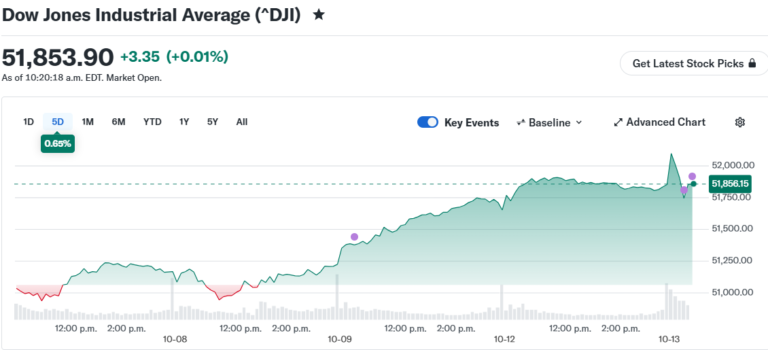
- Dow Jones Industrial Average: Closed on Friday at 51,654.95, advancing roughly 0.9% for the week. The Dow posted overall weekly gains but remained constrained by elevated long-term interest rates, energy price volatility, and corporate financing costs.
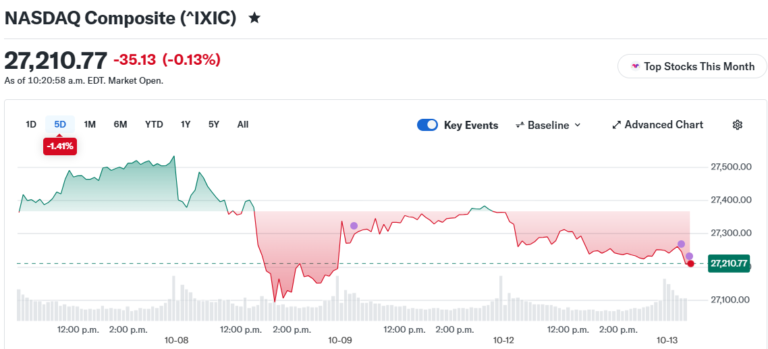
- Nasdaq Composite: Closed on Friday at 27,366.17, up approximately 0.6% for the week. Tech and AI-related shares provided continuous support, driving the Nasdaq to a new all-time high early in the week, though mid-week yield spikes created valuation headwinds.
Source: Yahoo Finance
U.S. Bonds: Stood at approximately 5.24% on Friday. Yields touched near 5.3% during the week, as long-term bond markets remained sensitive to inflation expectations, energy prices, and fiscal risks. Elevated yields remain a key focus for equity valuations and market liquidity.
Source: Yahoo Finance
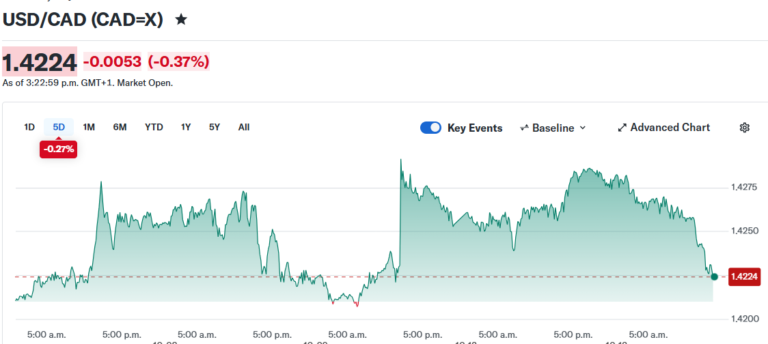
Forex Market:The Canadian dollar was weighed down by weak domestic employment data. Following the unexpected job loss in September, the loonie softened as expectations for a near-term Bank of Canada rate hike diminished.
Source: Yahoo Finance
Gold & Silver Market:
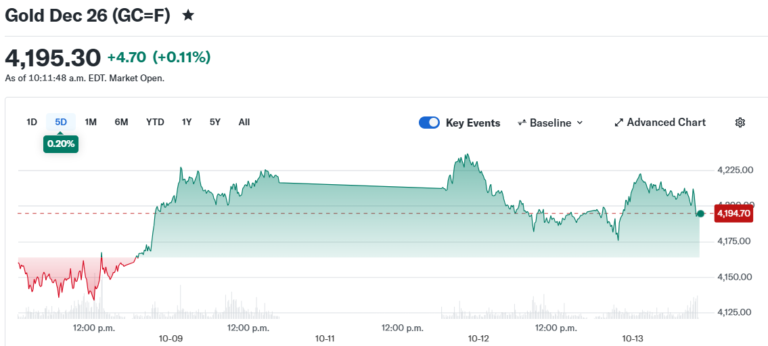
- Gold (GC=F): Gold prices were influenced by U.S. dollar movements, real interest rates, and shifting safe-haven demand. Elevated U.S. Treasury yields increased the opportunity cost of holding non-yielding assets, while geopolitical uncertainty provided continued support for safe-haven buying.
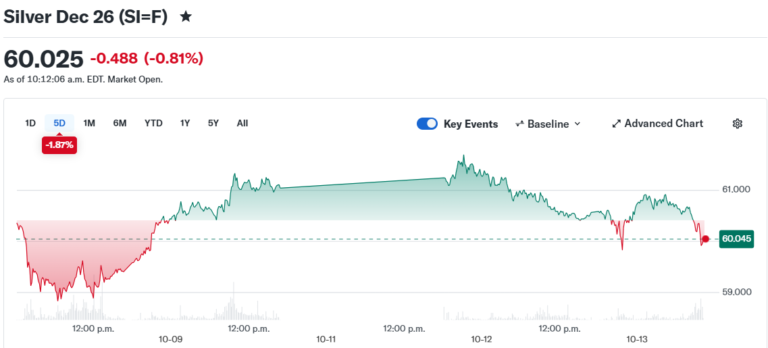
- Silver (SI=F): Silver price trends were similarly driven by shifts in the U.S. dollar and bond yields, while its industrial applications made growth outlooks an important price driver. Investors continue to monitor the relationship between precious metals and real interest rates.
Source: Yahoo Finance
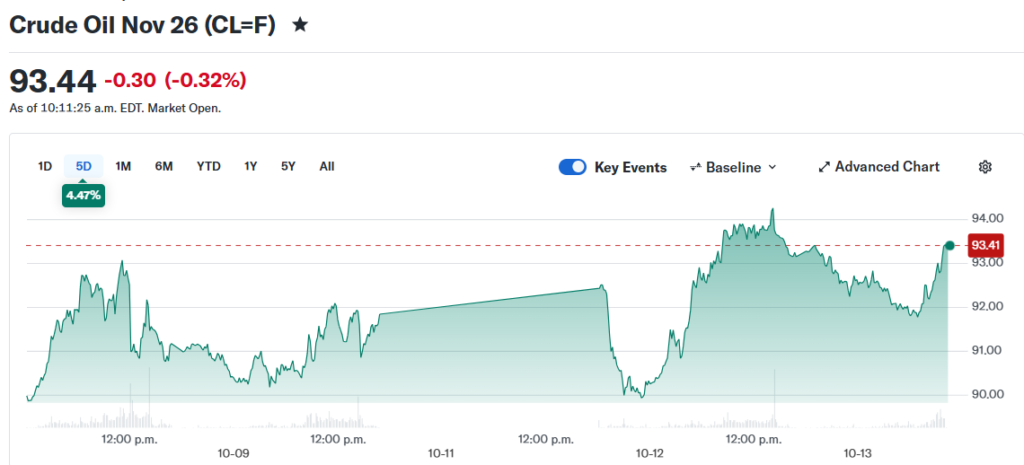
Oil Market: Crude oil saw significant volatility as markets constantly assessed Middle East tensions, supply disruption risks, and potential easing measures. Energy price movements remain a central driver of inflation expectations.
- Let us contact you
Investing with an AimStar's investment professional
Want expert advice at every step of your investing journey?
AimStar’s investment professionals can set you on the right course – and they can meet in-person or online.
Financial Market Data Copyright © 2026 AimStar myportfolio. Data as of October 13th, 2026, 15:30 PM EST

WHAT'S HAPPENING THIS WEEK
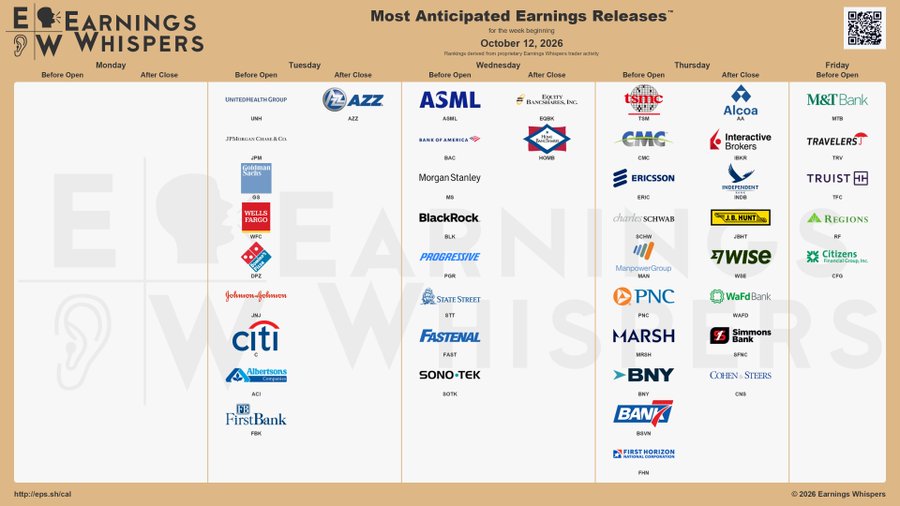
Upcoming Events This Week
October 12 (Monday)
- Economic Data & Events: U.S. bond markets observe Columbus Day holiday schedule.
- Key Earnings: No major earnings releases highlighted on the calendar.
October 13 (Tuesday)
- Key Earnings: UnitedHealth Group, JPMorgan Chase, Goldman Sachs, Wells Fargo, Citigroup, Johnson & Johnson, Albertsons, FirstBank; after the close, AZZ.
October 14 (Wednesday)
- Key Earnings: ASML, Bank of America, Morgan Stanley, BlackRock, Progressive, State Street, Fastenal, Sonoco Products; after the close, Citizens Financial Group, First Horizon, M&T Bank, Travelers, Truist, Regions Financial.
October 15 (Thursday)
- Key Earnings: Taiwan Semiconductor Manufacturing Company (TSMC), Alcoa, Commercial Metals, Ericsson, Charles Schwab, PNC Financial Services, Marsh McLennan, Bank of New York Mellon; after the close, Interactive Brokers, Independent Bank, J.B. Hunt, Wise, WaFd, Simmons First National, Cohen & Steers.
October 16 (Friday)
- Key Earnings: M&T Bank, Travelers, Truist Financial, Regions Financial, Citizens Financial Group.
Author by: Sarah San
Edited & Published by: Sarah San
October 13th , 2026 15:30 PM EST. 10 min read

AimStar Capital Group Inc. is a Canadian full-service Investment Dealer, regulated by Canadian Investment Regulatory Organization (CIRO) and a member of Canadian Investor Protection Fund (CIPF). As an independent firm, AimStar is built on a foundation of innovation, integrity, and client-centricity. They are committed to providing unbiased advice and dedicated to the client’s needs, helping them achieve their financial goals.
AimStar is recognized as a Wealth Professionals 5-star Wealth Management Firm for 2024, this award recognized AimStar has offered exceptional client experience, a proven investment track record, continuous innovation, and stringent regulatory compliance.