

Key Focus This Week: “Strait of Hormuz Tensions Shake Global Markets”
Recent tensions in the Strait of Hormuz have continued to escalate, with rising risks of shipping disruptions, creating far-reaching impacts on the global economy across multiple channels. As one of the world’s most critical energy transportation routes, instability in this region not only affects crude oil supply but also transmits shocks through global trade, financial markets, and corporate operations.
From the perspective of international trade, the Strait of Hormuz accounts for approximately 20% of global oil shipments. Any disruption directly reduces energy exports while increasing transportation costs. This not only pushes global energy prices higher but also raises shipping insurance costs and logistical uncertainty, thereby dampening international trade activity. Energy-importing countries, particularly major economies in Europe and Asia, face higher import costs, which may widen trade deficits and constrain economic growth.
From a monetary policy perspective, rising oil prices create imported inflation pressures that may force central banks to reassess their interest rate paths. Against a backdrop where markets previously expected rate cuts, energy-driven inflation shocks could delay or even reverse monetary easing. If inflation rises again due to higher energy costs, central banks may be forced to maintain higher interest rates for longer, which would further suppress investment and consumption. This form of “geopolitically driven inflation” makes policy decisions more complex and increases market volatility.
From a corporate earnings perspective, different sectors are likely to diverge significantly. Energy companies may benefit from higher oil prices and see improved profitability, driving gains in related stocks. In contrast, energy-intensive industries such as airlines, manufacturing, and transportation face rising costs and margin compression. Additionally, supply chain disruptions may lead to delivery delays, further impacting revenue performance and market expectations. As a result, uncertainty in corporate earnings is increasing, and investor sentiment is becoming more cautious.
Overall, tensions in the Strait of Hormuz are not merely a geopolitical event but a global economic shock transmitted through multiple channels, including international trade, monetary policy, and corporate earnings. Its future developments will have a critical impact on global market trends and warrant close monitoring.
Last Week’s Key Economic Data & News Recap
AI and Technology Sector Continues to Lead the Market
Last week, technology stocks remained a key driver of global financial markets, with artificial intelligence (AI)-related industries continuing to show strong momentum. Semiconductor and cloud computing companies remained in focus as investors assessed whether AI demand is still growing at a rapid pace and whether capital expenditure on computing infrastructure will continue to expand. Large technology companies were once again major contributors to index gains, with the Nasdaq outperforming other major indices. This reflects that the current market structure is still dominated by the “AI growth narrative,” although expectations for earnings delivery and valuation justification are increasing.
U.S. Earnings Season Begins, Investors Focus on Corporate Profits
The United States officially entered earnings season last week, with several major banks and corporations releasing their results. The market began reassessing corporate profitability. In a high-interest-rate environment, banking sector earnings remained resilient, although investment banking activity and loan growth showed divergence. Overall, earnings results became a key driver of short-term movements in the U.S. equity market.
Semiconductor Industry Becomes a Market Focus
The semiconductor sector was highly active last week, driven by strong AI-related demand. Investors continued to monitor developments in the chip supply chain and advanced manufacturing technologies. Key attention was placed on whether AI training and inference demand would translate into sustained long-term order growth, and whether capital expenditure trends might begin to slow. The sector’s volatility also amplified overall sentiment in technology stocks and played a significant role in influencing Nasdaq performance.
U.S. Inflation Remains Elevated
Recent data showed that U.S. inflation remained above approximately 3%, with persistent price pressures in services and energy-related components. This outcome further reduced market expectations for near-term interest rate cuts by the Federal Reserve, reinforcing the “higher for longer” monetary policy outlook.
Central Banks Face Monetary Policy Uncertainty
Against the backdrop of sticky inflation, central banks around the world are facing increasingly complex monetary policy decisions. Market expectations for rate cuts may be delayed or even reversed. Policymakers must balance inflation control with supporting economic growth, and this uncertainty has increased financial market volatility while also influencing investor decision-making.
Investing with an AimStar's investment professional
Want expert advice at every step of your investing journey?
AimStar’s investment professionals can set you on the right course – and they can meet in-person or online.

Market Performance Review – Last Week
Source: Yahoo Finance
Canadian Equities:
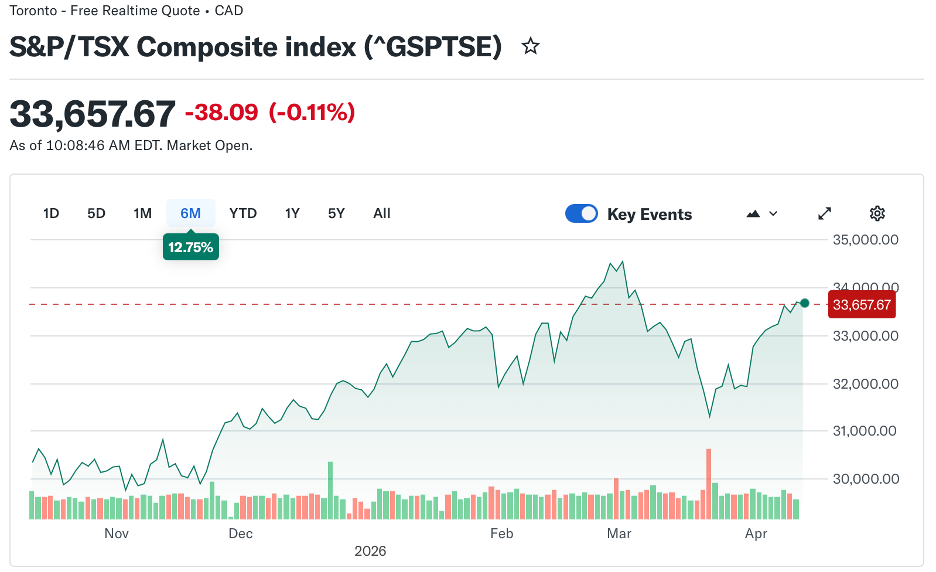
Last week, the Canadian stock market overall showed a “volatile upward trend,” with increased volatility throughout the week. The S&P/TSX Composite Index briefly climbed to the 33,600–33,700 range, ending the week with a gain of approximately 2%. Meanwhile, the financial sector showed mixed performance due to interest rate expectations and shifting risk sentiment. Technology stocks saw a modest rebound supported by the AI narrative, but their gains were smaller than those of the energy sector. Overall, the Canadian market remains highly dependent on the commodity cycle, and although it stayed relatively resilient amid rising oil prices and geopolitical uncertainty, index volatility increased significantly.
Source: Yahoo Finance
U.S. Equities:
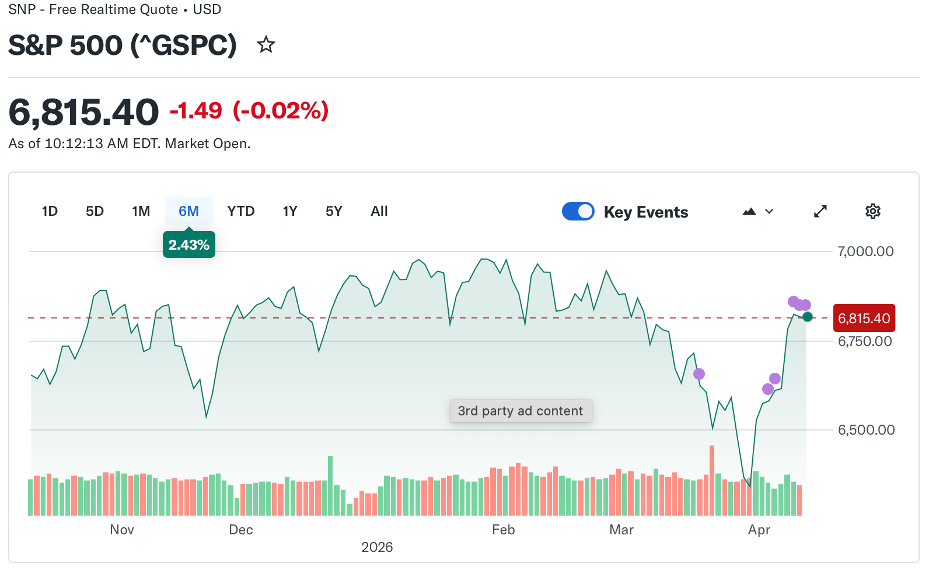
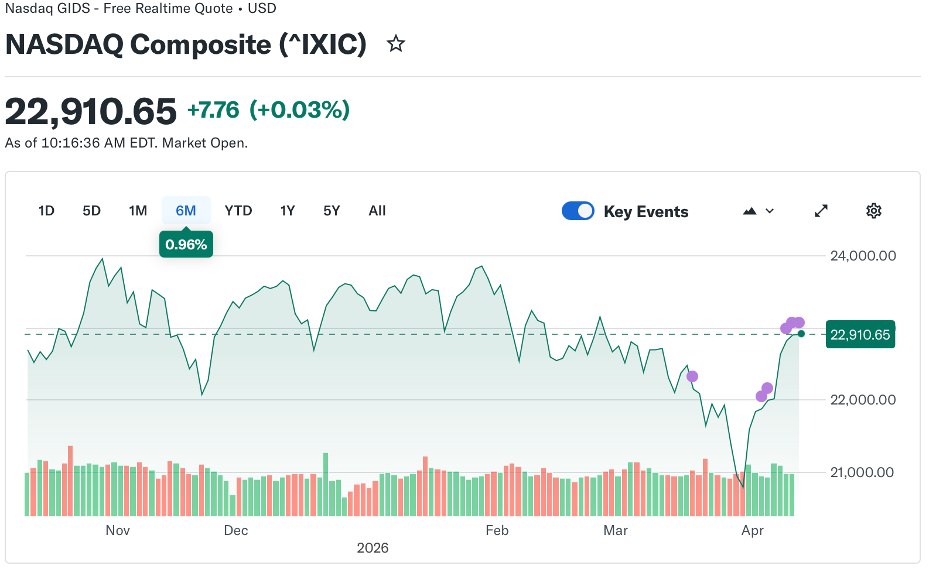
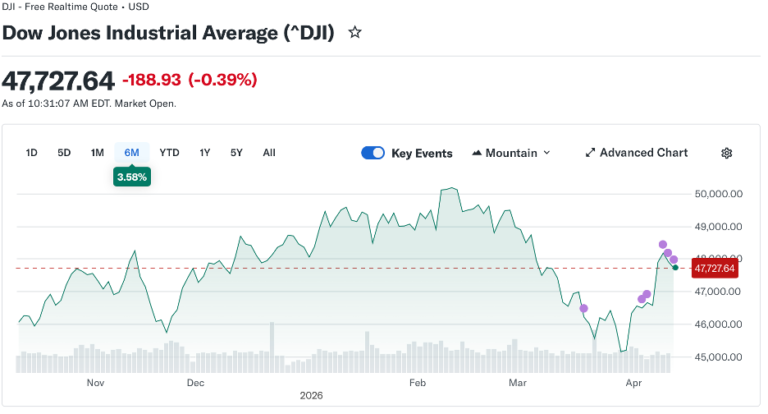
Last week, the U.S. stock market experienced a “strong rebound led by technology stocks.” The S&P 500 rose approximately 3%, the Nasdaq Composite gained around 4%, and the Dow Jones Industrial Average increased by roughly 2%. At the same time, AI-related and large-cap technology stocks continued to be the main drivers of gains, allowing the Nasdaq to significantly outperform the broader market. However, recent inflation data remained above 3%, keeping investors cautious about the Federal Reserve’s rate-cut path. As a result, this rally is viewed more as a risk-recovery and sentiment-driven rebound rather than a broad-based trend reversal.
Source: Yahoo Finance
U.S. Bonds:
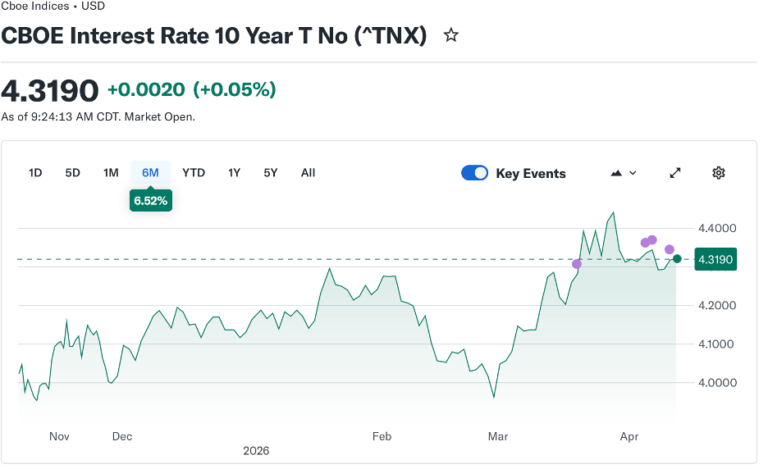
Last week, the U.S. Treasury market showed a “high-level range-bound movement with a slightly steeper yield curve.” The U.S. 10-Year Treasury Yield fluctuated between approximately 4.3%–4.5%, while the 2-year yield remained around 4.0%–4.2%.
Source: Yahoo Finance

Forex Market:
In the foreign exchange market, the U.S. dollar remained relatively strong and range-bound. The U.S. Dollar Index (DXY) maintained resilience supported by safe-haven demand and expectations of higher-for-longer interest rates, driven by inflation remaining above 3% and delayed expectations of Fed rate cuts. The USD/CAD exchange rate fluctuated within the 1.36–1.38 range.
Source: Yahoo Finance
Gold & Silver Market:
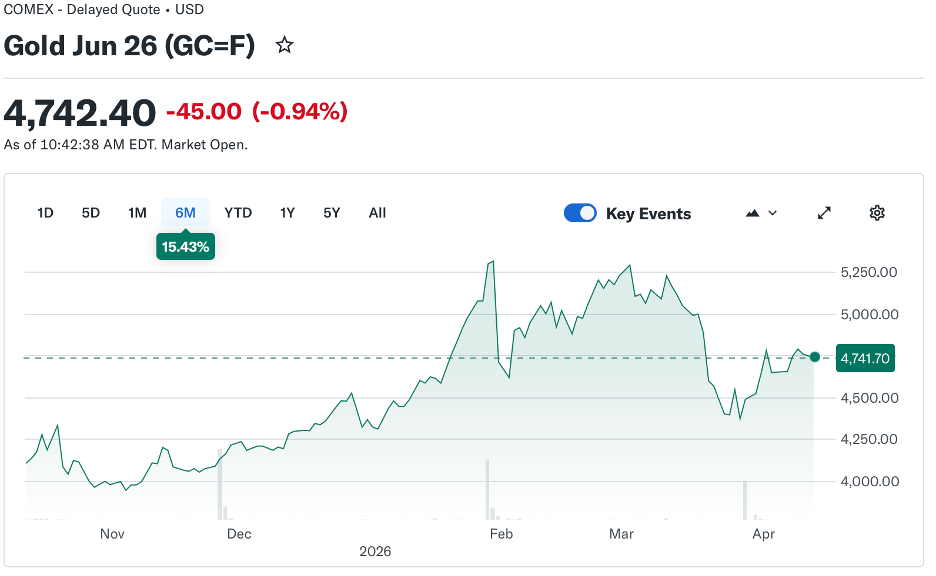
Last week, the gold market showed a “high-level consolidation with a bullish bias,” with prices fluctuating around the $2,300 per ounce range. U.S. inflation remained above 3%, which pushed back expectations for Federal Reserve rate cuts. As a result, the U.S. dollar and Treasury yields stayed elevated, putting pressure on gold prices.
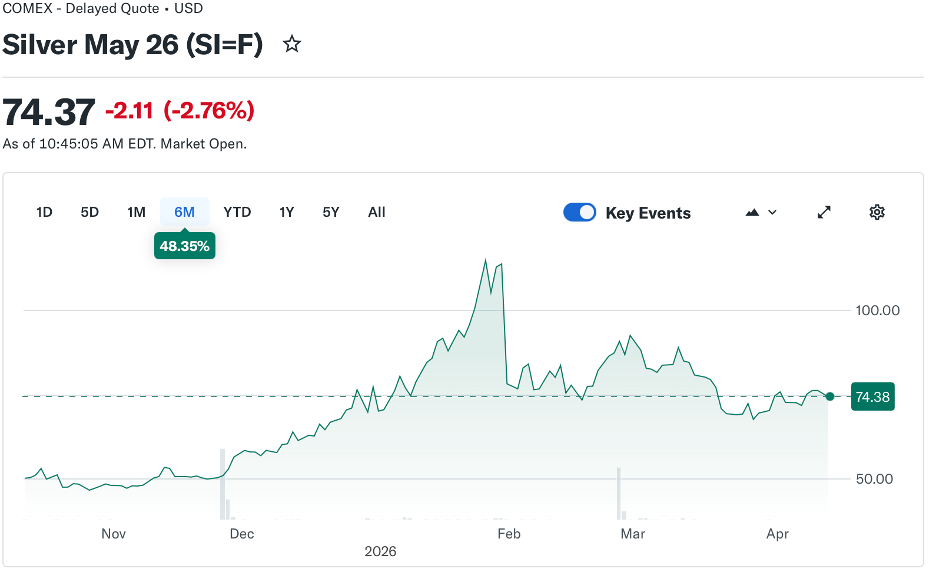
Silver, on the other hand, experienced a “decline followed by a rebound” pattern. Prices initially fell to around $75, but later rebounded quickly to the $77–78 range as the dollar weakened and safe-haven demand picked up, leading to increased volatility.
Source: Yahoo Finance
Oil Market:
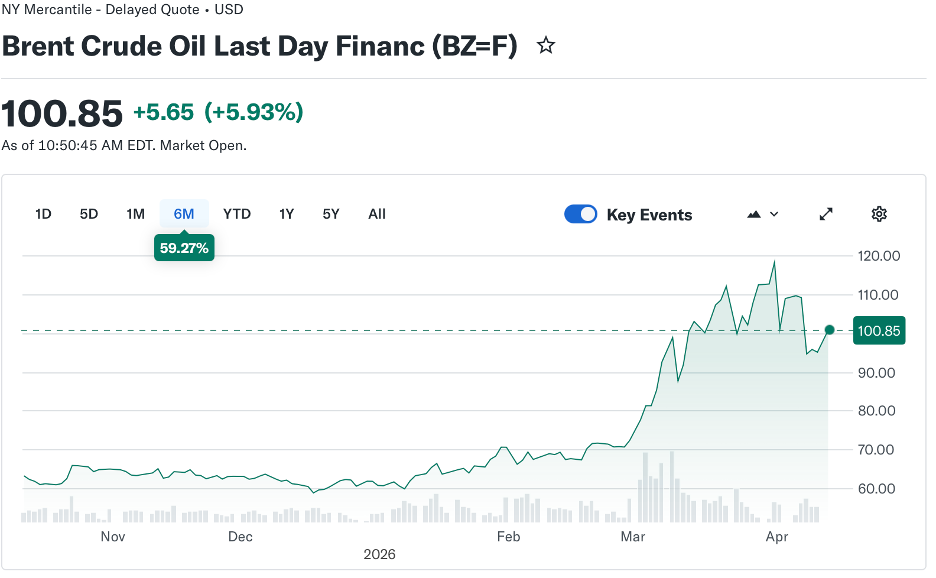
Crude oil prices remained highly volatile, trading in a high-level consolidation range. WTI crude fluctuated between approximately $90–$100 per barrel, with intraday volatility reaching about 10%–12%.
- Let us contact you
Investing with an AimStar's investment professional
Want expert advice at every step of your investing journey?
AimStar’s investment professionals can set you on the right course – and they can meet in-person or online.
Financial Market Data Copyright © 2026 AimStar myportfolio. Data as of April 6 , 2026, 12:30 PM EST

WHAT'S HAPPENING THIS WEEK

- Major banks will report earnings first, including JPMorgan Chase and Goldman Sachs. The market will focus on loan profitability under high interest rates, investment banking performance, and credit quality (bad loans). This phase typically sets the tone for the entire earnings season.
April 14 (Tuesday) Producer Price Index (PPI) :
- PPI and Core PPI are the most important inflation indicators this week, reflecting cost pressures at the producer level. If the data comes in above expectations, it suggests persistent inflation, weakens rate-cut expectations, pushes the US dollar and Treasury yields higher, and puts pressure on gold and equities.
April 16 (Thursday) Initial Jobless Claims:
- Initial jobless claims are one of the most important high-frequency labor market indicators. An increase suggests cooling in the labor market and supports rate-cut expectations, while persistently low levels indicate continued economic resilience.
- Consumer and growth companies such as Netflix will report earnings. The market will focus on user growth, advertising revenue, and whether consumer demand is slowing, which will shape the overall assessment of economic resilience.
Author by: Sarah San
Edited & Published by: Sarah San
April 13 , 2026 13:00 PM EST. 10 min read

AimStar Capital Group Inc. is a Canadian full-service Investment Dealer, regulated by Canadian Investment Regulatory Organization (CIRO) and a member of Canadian Investor Protection Fund (CIPF). As an independent firm, AimStar is built on a foundation of innovation, integrity, and client-centricity. They are committed to providing unbiased advice and dedicated to the client’s needs, helping them achieve their financial goals.
AimStar is recognized as a Wealth Professionals 5-star Wealth Management Firm for 2024, this award recognized AimStar has offered exceptional client experience, a proven investment track record, continuous innovation, and stringent regulatory compliance.