

Key Focus This Week:
“Global Markets Focus on U.S. Jobs, Central Bank Policy, AI Earnings and Geopolitical Risks”
Global markets will focus this week on U.S. employment and economic data, major central bank policy developments, AI-related earnings, and geopolitical risks. In the U.S., JOLTS job openings and ISM manufacturing and services PMIs will provide important signals ahead of Friday’s August nonfarm payrolls report, which could drive another repricing of expectations for the Federal Reserve’s September policy decision.
In Europe, August inflation data will be closely watched for indications of whether the ECB may adopt a more hawkish stance. The Bank of Canada’s September 2 policy meeting will also be in focus, with its guidance likely to influence the Canadian dollar, Canadian government bonds, and other rate-sensitive assets. On the corporate front, Broadcom’s earnings will serve as another important test of global AI capital spending following Nvidia’s results.
Meanwhile, developments in the Middle East, sanctions on Iran, and risks surrounding the Strait of Hormuz remain key external uncertainties. Any sustained increase in oil prices could reinforce global inflation pressures and push interest-rate expectations higher. Markets will also monitor policy signals on U.S.-China trade, the Japanese yen, and Iran during the G20 finance ministers and central bank governors meeting, as well as China’s August manufacturing PMI. Overall, the market narrative this week is likely to remain centered on employment, inflation, and interest rates, with changes in macroeconomic data and policy expectations continuing to drive global risk assets.
Week’s Key Economic Data & News Recap
Fed Policy Expectations Turn More Hawkish
The Federal Reserve’s policy outlook has once again become a key market driver. Fed Chair Warsh reiterated the 2% inflation target at Jackson Hole and noted that current financial conditions remain insufficiently restrictive, prompting markets to significantly increase expectations for another rate hike in September. Following his remarks, the U.S. 2-year Treasury yield rose rapidly to around 4.35%, while the U.S. dollar strengthened and gold and high-valuation technology stocks came under pressure.
Overall, markets are shifting away from earlier expectations of rate cuts and back toward a “higher for longer” environment, while also reassessing the possibility of further tightening. The interest-rate path has therefore returned as one of the most important drivers of global asset pricing.
Nvidia Earnings Continue to Validate the AI Capex Cycle
Nvidia’s latest quarterly results continued to demonstrate strong demand for global AI infrastructure. Second-quarter revenue reached $96.2 billion, up 106% year over year, while data center revenue rose 117% to $89.0 billion. The company guided for approximately $108 billion in revenue next quarter, which would mark its first quarter above the $100 billion threshold.
The Rubin platform has also entered full-scale production, suggesting that AI capital spending by major technology companies has yet to show a meaningful slowdown. However, with U.S. Treasury yields moving higher again, investor attention is gradually shifting from earnings growth toward valuation risk. A sustained high-rate environment could increasingly limit further multiple expansion across the technology sector.
Global Fund Flows Show Rotation Away from U.S. Equities
For the week ended August 26, global equity funds ended a 13-week streak of net inflows. U.S. equity funds recorded approximately $22.3 billion in net outflows, while European and Asian equity funds attracted roughly $7.9 billion and $4.8 billion, respectively. Emerging-market equity funds also posted their seventh consecutive week of inflows.
The trend suggests that investors are not broadly exiting risk assets, but are instead reducing concentrated exposure to relatively expensive U.S. equities while increasing allocations to Europe, Asia, and emerging markets. Short-duration bonds also continued to attract capital, highlighting a broader preference for managing valuation and rate risk through both geographic and asset-class rotation.
Yen Falls Below 160 Again as Intervention Impact Remains Limited
The Japanese yen weakened again this week, with USD/JPY moving back above the 160 level. Despite Japan spending approximately $96 billion on foreign-exchange intervention over the past month, the yen has remained under pressure, highlighting the limited ability of intervention alone to offset depreciation driven by wide U.S.-Japan interest-rate differentials.
As U.S. rate expectations move higher, markets have also increased expectations for further Bank of Japan tightening. The yen remains an important risk indicator: a sharper BOJ tightening cycle or a rapid yen rebound could trigger an unwinding of yen-funded carry trades and potentially create liquidity pressure across global equities and other risk assets.
Global Central Banks Shift from Easing Toward Renewed Tightening
The global monetary policy backdrop has shifted noticeably in recent months. Over the past three months, the number of rate hikes by major central banks has exceeded the number of rate cuts, suggesting that the two-year global easing trend may be beginning to reverse. Persistent U.S. inflation has brought further Fed tightening back into discussion, while the ECB and Bank of Japan are also facing renewed inflation and currency pressures.
If this trend continues, global markets could enter a renewed tightening phase, creating pressure on growth-stock valuations, long-duration bonds, gold, and highly leveraged assets. Markets are therefore likely to become increasingly sensitive to inflation data and central bank communication.
U.S. Economic Resilience Continues to Support the “No-Landing” Trade
Recent U.S. data continue to point to resilient economic activity. The August flash composite PMI rose to 56.0, its highest level in more than four years, supported by particularly strong services activity. Meanwhile, the eurozone composite PMI increased to 52.1, the strongest reading in around nine months.
Resilient growth reduces near-term recession risks, but it also suggests that demand remains strong enough to slow the pace of disinflation. As a result, markets are reassessing a “no-landing” scenario, in which economic growth remains firm while interest rates stay elevated for longer, reinforcing the case for tighter monetary policy.
Investing with an AimStar's investment professional
Want expert advice at every step of your investing journey?
AimStar’s investment professionals can set you on the right course – and they can meet in-person or online.

Market Performance Review – Last Week
Source: Yahoo Finance
Canadian Equities:
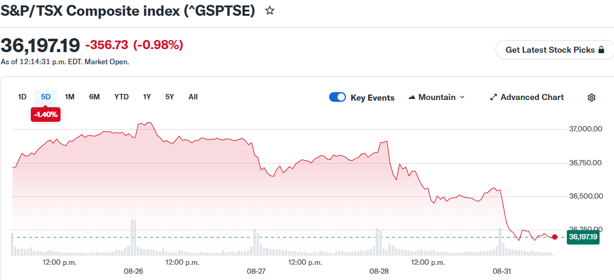
The S&P/TSX Composite Index moved higher early in the week before reversing course. The index reached a weekly intraday high of around 37,069 points on Wednesday, but later gave back its gains as energy, materials, and technology shares weakened. The TSX ended Friday at approximately 36,554 points, down about 0.18% for the week. Despite relatively resilient Canadian economic data, lower oil prices and rising global rate expectations weighed on market sentiment.
Source: Yahoo Finance
U.S. Equities:
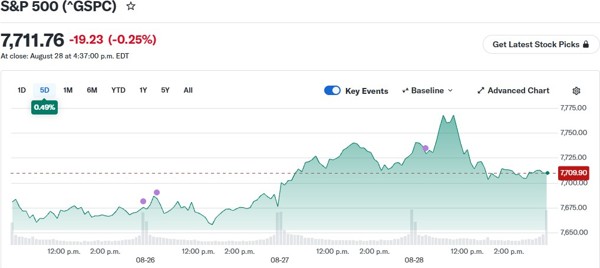
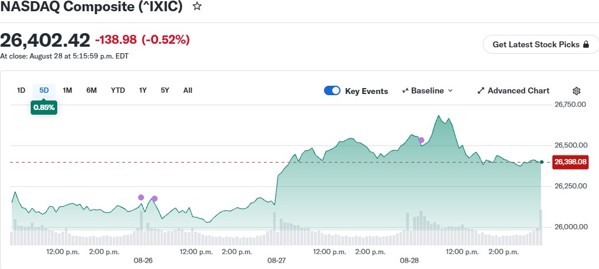
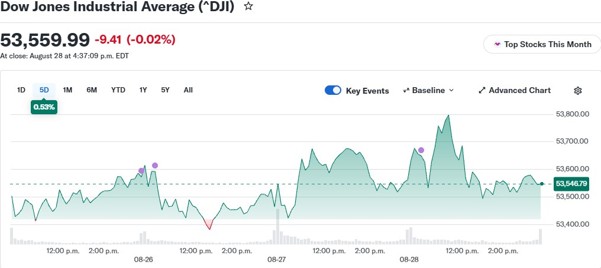
U.S. equities finished the week higher despite notable volatility. The S&P 500 rose 0.49% to 7,711.76, while the Nasdaq Composite gained 0.85% to 26,402.42 and the Dow Jones Industrial Average advanced 0.53% to 53,559.99. Markets rebounded sharply on Thursday, led by technology shares following strong Nvidia earnings and continued optimism around AI demand. On Friday, however, major indexes pulled back from intraday highs as Chair Warsh’s hawkish comments pushed interest-rate expectations higher. The Nasdaq was the most sensitive to the shift in rate expectations, while the Dow remained comparatively resilient as value stocks and large-cap blue-chip companies held up better.
Source: Yahoo Finance
U.S. Bonds:
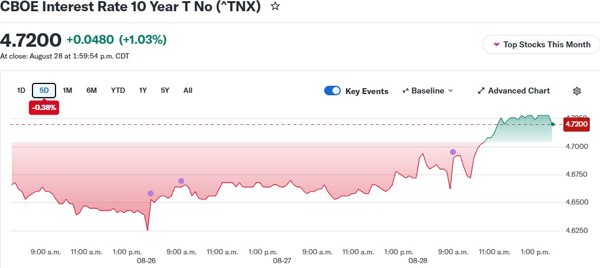
The U.S. 10-year Treasury yield declined early in the week before reversing higher. It briefly fell to around 4.64% on Tuesday, then climbed steadily to finish Friday at 4.72%. Despite the late-week rebound, the yield still ended the week approximately 1.8 basis points lower than the previous Friday. Following Warsh’s remarks, the sharp increase in yields placed renewed pressure on technology-stock and gold valuations while supporting the U.S. dollar.
Source: Yahoo Finance
Forex Market:
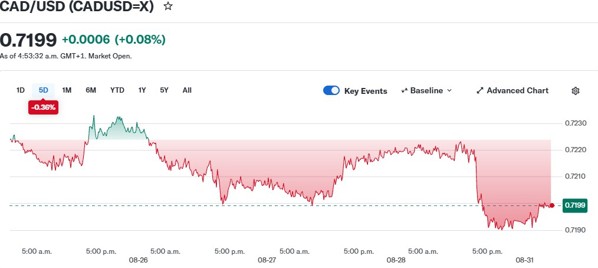
The Canadian dollar weakened over the week, with CAD/USD declining from around 0.725 at the beginning of the period to approximately 0.719–0.720 by Friday, marking one of its weaker weekly performances in more than two months. Rising U.S. rate expectations, a stronger U.S. dollar, and uncertainty surrounding U.S.-Canada trade negotiations and tariffs all weighed on the currency.
Source: Yahoo Finance
Gold & Silver Market:
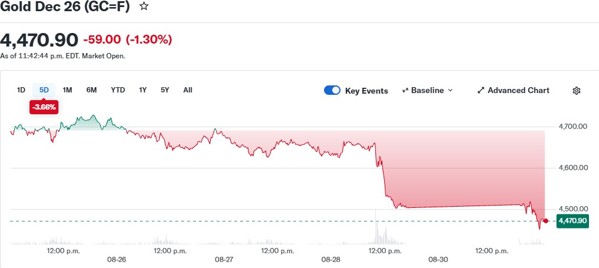
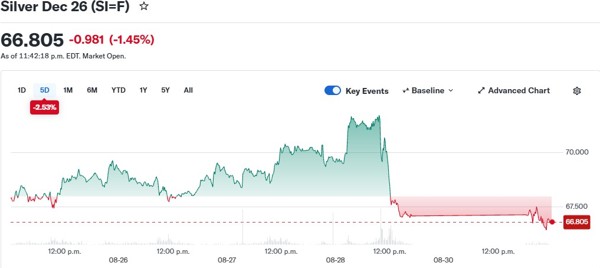
Precious metals were volatile this week, with both gold and silver ending lower after early gains. COMEX gold futures closed at approximately $4,529.90, down 2.04% for the week, after spot gold reached a more than three-month high of $4,696.18 on Tuesday. Silver futures fell about 2.42% to $67.79, despite briefly climbing to $72.05 on Friday. Both metals came under pressure as Warsh’s hawkish comments reinforced expectations for tighter Fed policy, pushing U.S. Treasury yields and the dollar higher and triggering profit-taking, with silver experiencing the sharper pullback due to its higher volatility.
Source: Yahoo Finance
Oil Market:
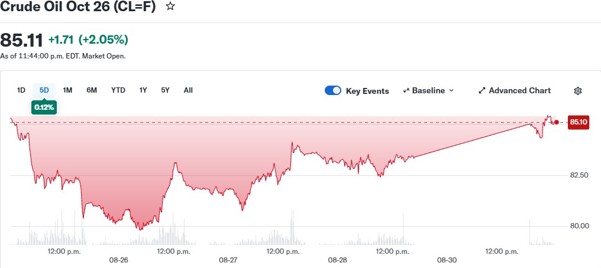
WTI crude oil declined noticeably over the week, with Yahoo Finance showing a weekly loss of approximately 4.20% and a Friday close of $83.40 per barrel, down sharply from around $87 the previous week. Expectations of a potential agreement involving the Strait of Hormuz and easing supply concerns weighed on prices. Lower oil prices may help reduce inflation pressures, but they also created headwinds for energy stocks and the Canadian dollar.
- Let us contact you
Investing with an AimStar's investment professional
Want expert advice at every step of your investing journey?
AimStar’s investment professionals can set you on the right course – and they can meet in-person or online.
Financial Market Data Copyright © 2026 AimStar myportfolio. Data as of August 31st, 2026, 12:30 PM EST

WHAT'S HAPPENING THIS WEEK
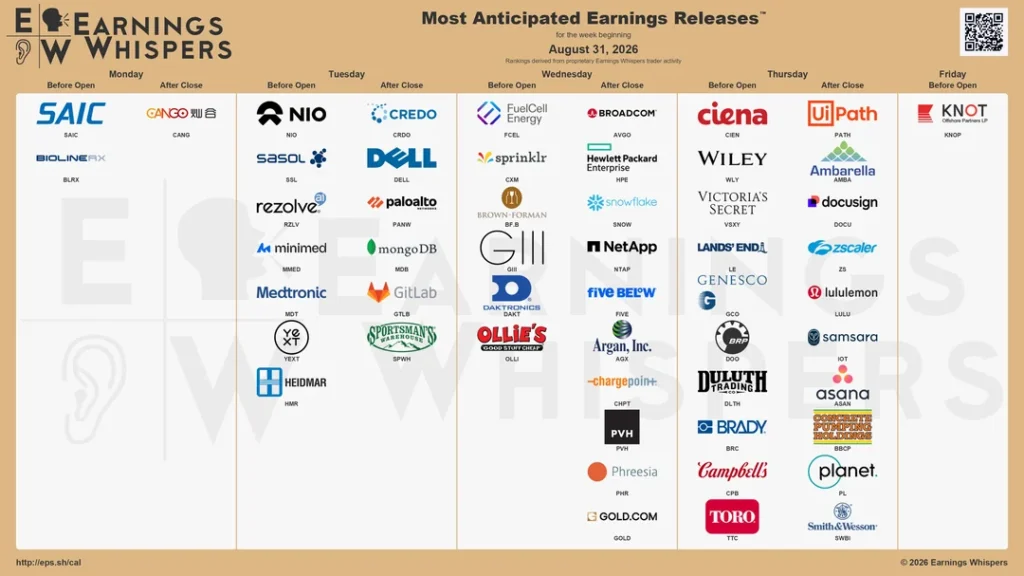
Upcoming Events (August 31 – September 4, 2026)
Monday, Aug. 31
- SAIC (SAIC) — Before Open
- Cango (CANG) — After Close
Tuesday, Sept. 1
- NIO (NIO) — Before Open
- Medtronic (MDT) — Before Open
- Dell Technologies (DELL) — After Close
- Palo Alto Networks (PANW) — After Close
- MongoDB (MDB) — After Close
- GitLab (GTLB) — After Close
Wednesday, Sept. 2
- FuelCell Energy (FCEL) — Before Open
- Brown-Forman (BF.B) — Before Open
- Broadcom (AVGO) — After Close
- Snowflake (SNOW) — After Close
- Hewlett Packard Enterprise (HPE) — After Close
- NetApp (NTAP) — After Close
- Five Below (FIVE) — After Close
Thursday, Sept. 3
- Ciena (CIEN) — Before Open
- Victoria’s Secret (VSCO) — Before Open
- Campbell’s (CPB) — Before Open
- UiPath (PATH) — After Close
- DocuSign (DOCU) — After Close
- Zscaler (ZS) — After Close
- Lululemon (LULU) — After Close
Author by: Sarah San
Edited & Published by: Sarah San
August 31st , 2026 12:30 PM EST. 10 min read

AimStar Capital Group Inc. is a Canadian full-service Investment Dealer, regulated by Canadian Investment Regulatory Organization (CIRO) and a member of Canadian Investor Protection Fund (CIPF). As an independent firm, AimStar is built on a foundation of innovation, integrity, and client-centricity. They are committed to providing unbiased advice and dedicated to the client’s needs, helping them achieve their financial goals.
AimStar is recognized as a Wealth Professionals 5-star Wealth Management Firm for 2024, this award recognized AimStar has offered exceptional client experience, a proven investment track record, continuous innovation, and stringent regulatory compliance.