

Key Focus This Week:
“Federal Reserve Policy Signals, NVIDIA Earnings, and U.S.–Canada Economic Growth”
This week’s key themes in North American markets are relatively concentrated. Investors will focus primarily on the Federal Reserve Chair’s speech at Jackson Hole, the latest U.S. growth and inflation indicators, and whether NVIDIA’s earnings provide further validation of the artificial intelligence investment boom. In Canada, second-quarter GDP and labour demand data will be critical in assessing the sustainability of the economic recovery.
Federal Reserve Chair Kevin Warsh is scheduled to speak at the Jackson Hole Economic Policy Symposium on Friday. Minutes from the latest FOMC meeting showed that concerns over persistent inflation have increased among Fed officials. Markets will therefore closely monitor how Warsh assesses current inflation conditions, economic growth, and the future direction of interest rates. The Federal Reserve has officially confirmed the speech for August 28.
Before then, the United States will release its revised second-quarter GDP estimate and the latest Personal Income and Outlays report, including the Federal Reserve’s preferred PCE inflation indicators. Markets will use these figures to determine whether the U.S. economy remains resilient and whether inflationary pressures are strong enough to justify maintaining a restrictive monetary policy stance.
NVIDIA will report its latest quarterly results on Wednesday. As a key indicator of artificial intelligence infrastructure investment, the company’s data centre demand, chip supply conditions, and management’s outlook for future AI spending could influence the broader semiconductor and large-cap technology sectors. NVIDIA has officially confirmed that it will report results on August 26.
The recent increase in long-term bond yields has already placed pressure on highly valued technology stocks. As a result, markets will focus not only on whether AI demand continues to expand, but also on whether elevated capital expenditure can translate into sustainable profitability.
Statistics Canada will release second-quarter GDP and June monthly GDP data on Friday. Payroll employment and job vacancy figures are also scheduled for release this week. Markets will use these reports to assess whether the recent improvement in employment and consumer spending is translating into broader economic growth.
If economic activity continues to expand across a wider range of industries, it would support the view that the Canadian economy is gradually recovering. Conversely, if growth remains overly dependent on a limited number of sectors, concerns about future economic momentum may re-emerge.
Week’s Key Economic Data & News Recap
Federal Reserve Minutes Reveal Growing Inflation Concerns
Minutes from the July FOMC meeting showed that Federal Reserve officials had become increasingly concerned about inflation remaining above target, with some policymakers indicating that monetary policy might need to be tightened further. Divisions within the committee over the next policy move also became more apparent, leaving the direction of September’s decision open.
Canadian Inflation Accelerates Again
Canada’s headline inflation rate increased in July, primarily driven by higher energy and travel-related prices. However, the core inflation measures that better reflect broader price trends remained relatively stable, suggesting that inflationary pressures have not yet begun to accelerate across the economy.
Canadian Retail Spending Continues to Improve
Canadian retail sales continued to increase in June, with gains recorded across a broad range of categories. Core retail activity also remained positive, indicating that household consumption continues to demonstrate resilience despite the elevated cost of living and is providing support for domestic economic growth.
U.S. Consumers Become More Cautious
Earnings reports from major U.S. retailers showed that consumers have not broadly reduced their spending, but their purchasing behaviour has become more cautious. Consumers are placing greater emphasis on value and essential goods while reducing spending on large discretionary purchases and home-improvement products. This suggests that elevated energy prices and financing costs continue to affect household budgets.
Rising Bond Yields and Oil Prices Weigh on Global Equities
Global equity markets came under pressure last week as long-term U.S. Treasury yields continued to rise and geopolitical tensions in the Middle East kept energy prices elevated. Higher financing costs weighed particularly heavily on technology and semiconductor stocks, while gold benefited from stronger safe-haven demand and a weaker U.S. dollar.
Investing with an AimStar's investment professional
Want expert advice at every step of your investing journey?
AimStar’s investment professionals can set you on the right course – and they can meet in-person or online.

Market Performance Review – Last Week
Source: Yahoo Finance
Canadian Equities:
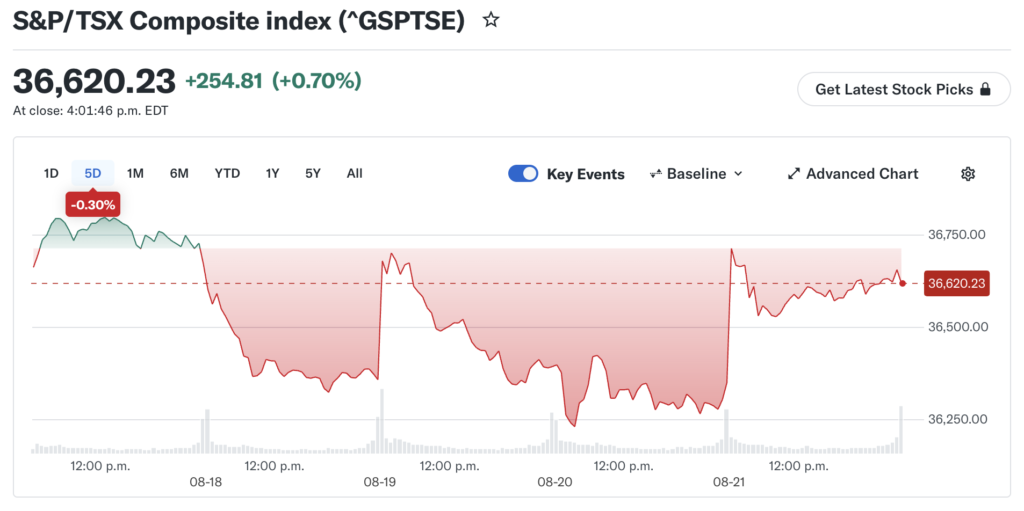
Last week, the Canadian equity market remained volatile at elevated levels, declining early in the week before recovering. The S&P/TSX Composite Index traded primarily within the 36,200–36,850 range, falling approximately 0.30% over five trading days to close at 36,620.23.
Source: Yahoo Finance
U.S. Equities:
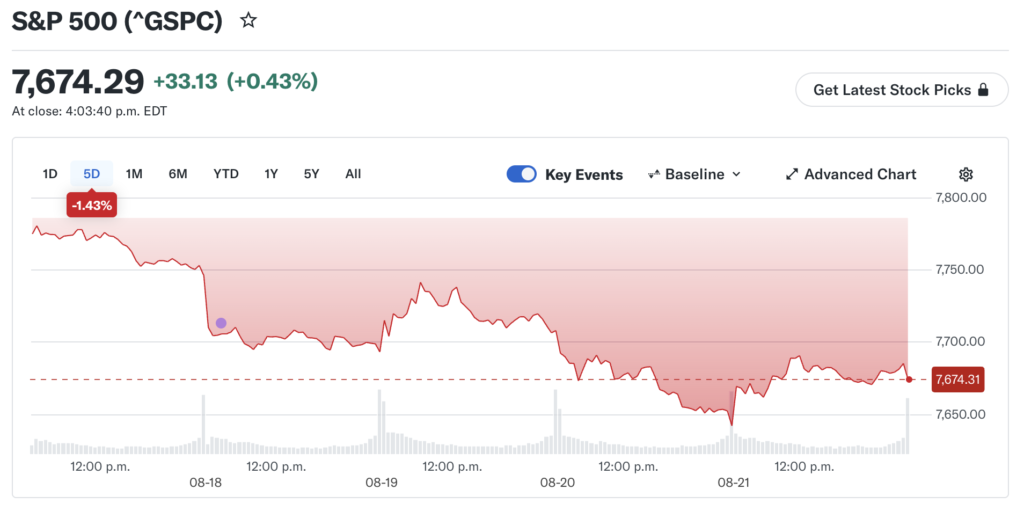
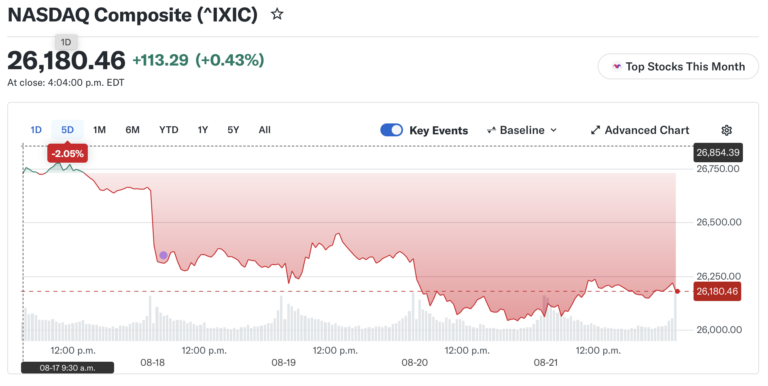
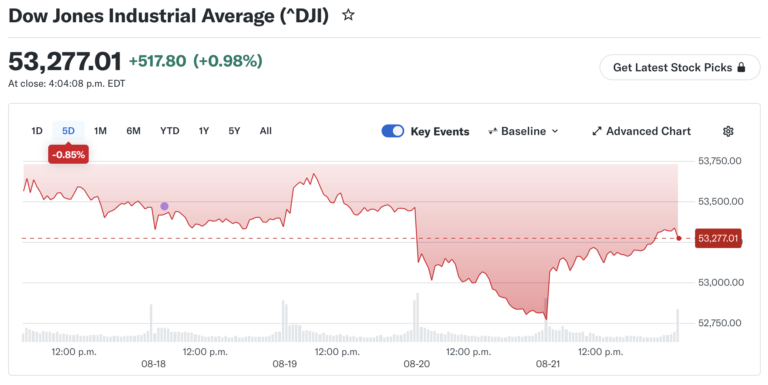
Last week, all three major U.S. stock indices traded lower amid continued market volatility. The S&P 500 Index remained largely within the 7,640.00–7,785.00 range, declining 1.43% over five trading days to close at 7,674.29. The NASDAQ Composite traded primarily between 26,030.00 and 26,780.00, falling 2.05% to close at 26,180.46. Meanwhile, the Dow Jones Industrial Average remained within the 52,750.00–53,680.00 range, declining 0.85% to close at 53,277.01.
Source: Yahoo Finance
U.S. Bonds:
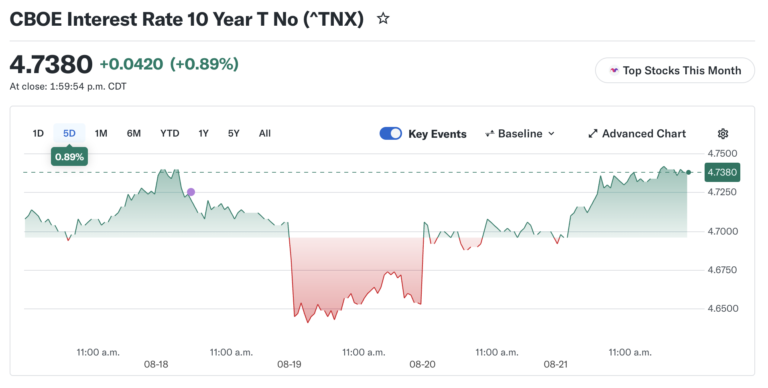
Last week, the U.S. 10-year Treasury yield (^TNX) traded primarily within the 4.64%–4.74% range, rising 0.89% over five trading days to close at 4.738%. The yield declined noticeably during the week before rebounding amid higher oil prices, persistent inflation concerns, and pressure from the supply of longer-term government debt. This reflected continued market caution regarding the Federal Reserve’s policy outlook, while the rise in yields placed downward pressure on U.S. Treasury prices.
Source: Yahoo Finance
Forex Market:
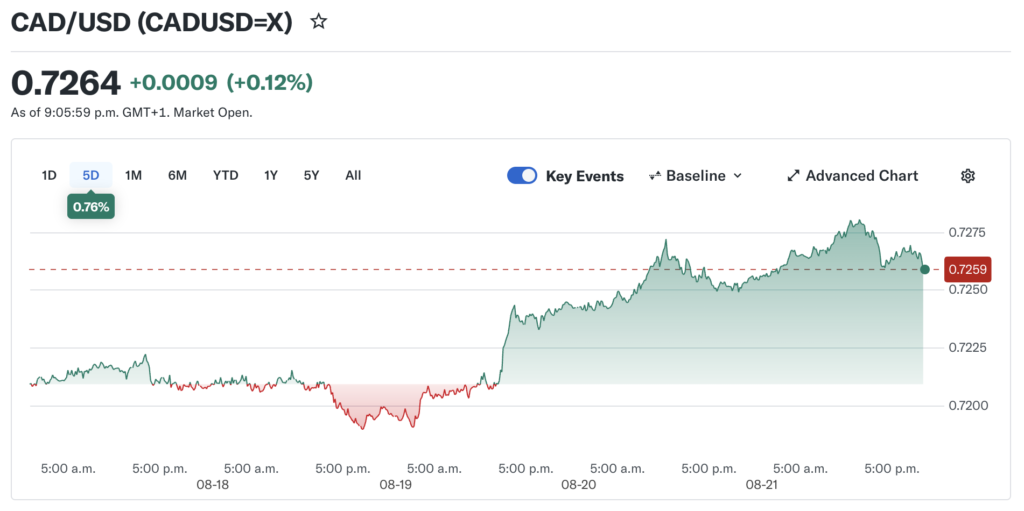
Last week, the Canadian dollar traded primarily within the 0.7190–0.7280 range against the U.S. dollar, gaining 0.76% over five trading days to close at 0.7264. The Canadian dollar weakened briefly early in the week before rebounding noticeably, supported by higher global oil prices and a weaker U.S. dollar, resulting in an overall pattern of an early decline followed by a recovery.
Source: Yahoo Finance
Gold & Silver Market:
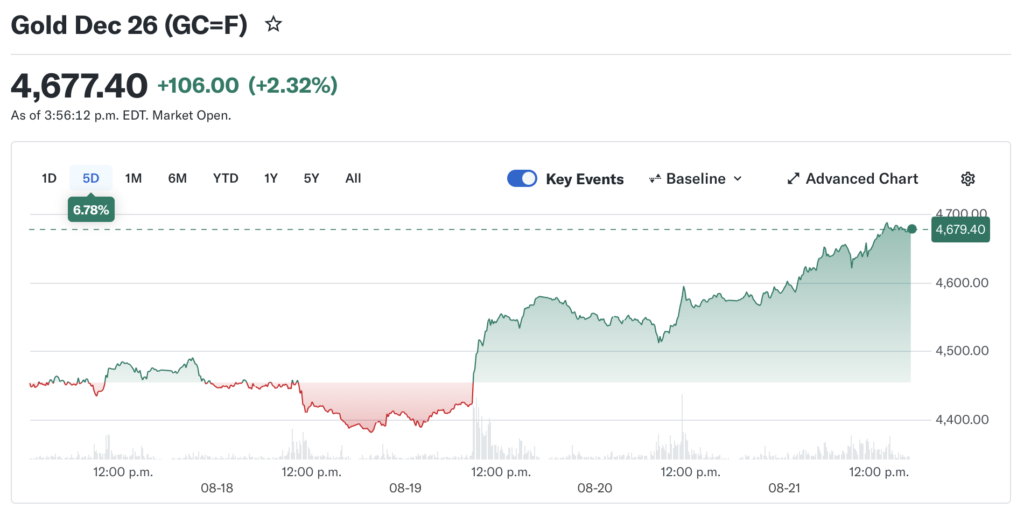
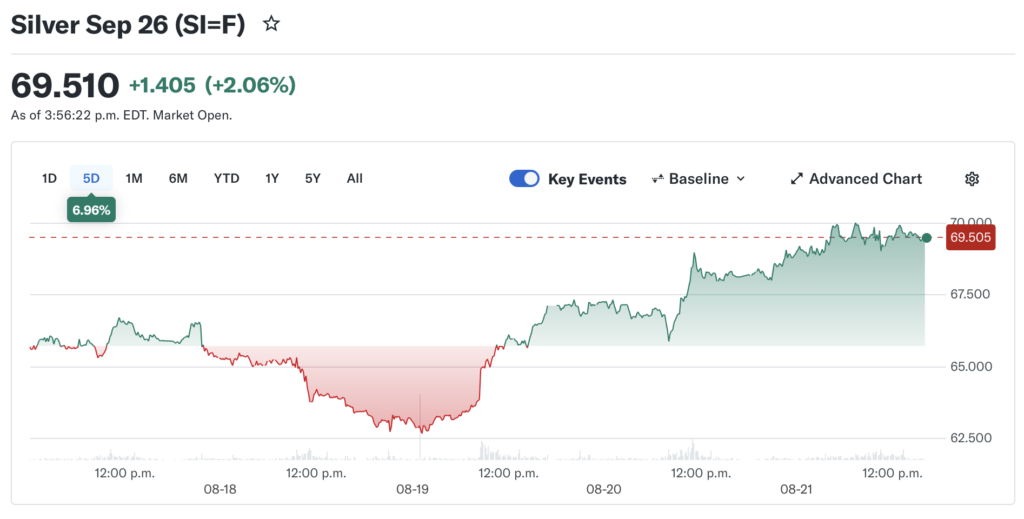
Last week, gold futures traded primarily within the 4,380.00–4,690.00 range, rising 6.78% over five trading days to close at 4,677.40. Silver futures traded mainly between 62.50 and 70.00, gaining 6.96% to close at 69.51. Uncertainty surrounding the situation in the Middle East and stronger safe-haven demand jointly drove precious metal prices significantly higher.
Source: Yahoo Finance
Oil Market:
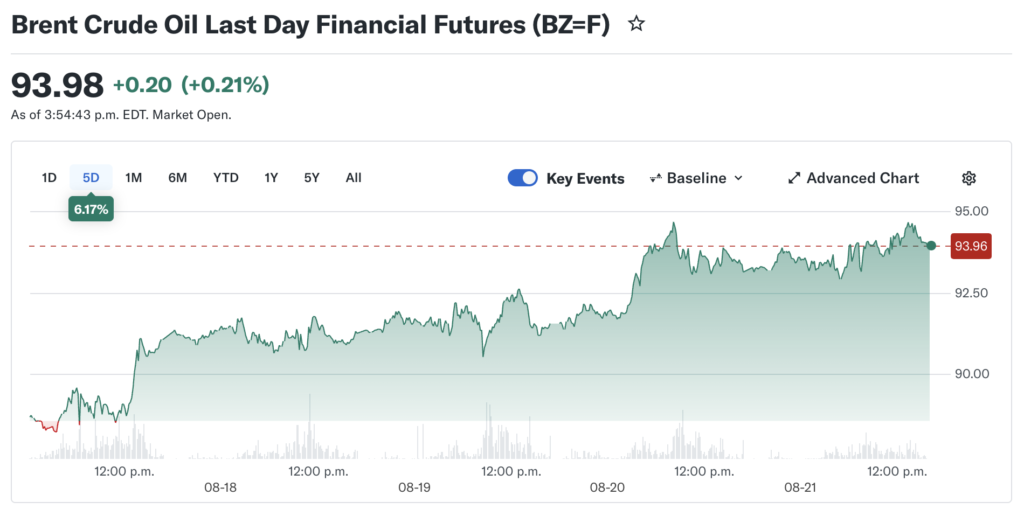
Last week, Brent crude oil futures traded primarily within the US$88.20–US$94.70 range, rising 6.17% over five trading days to close at US$93.98. Continued tensions in the Middle East and growing concerns about tighter crude oil supplies jointly drove oil prices significantly higher.
- Let us contact you
Investing with an AimStar's investment professional
Want expert advice at every step of your investing journey?
AimStar’s investment professionals can set you on the right course – and they can meet in-person or online.
Financial Market Data Copyright © 2026 AimStar myportfolio. Data as of August 24th, 2026, 12:30 PM EST

WHAT'S HAPPENING THIS WEEK

Upcoming Events (August 24 – August 28, 2026)
August 24 (Monday)
Before market open: XPeng, PDD Holdings, and others report earnings.
After market close: Gorilla Technology, PicPay, Woodside Energy, Tuya, and others report earnings.August 25 (Tuesday)
Before market open: Dick’s Sporting Goods, Scotiabank, BMO, Vipshop, and others report earnings.
After market close: Intuit, Zoom, Box, Semtech, HEICO, and others release results. Markets will focus on Canadian banks’ loan growth, provisions for credit losses, and net interest margins.August 26 (Wednesday)
Before market open: Kohl’s, Abercrombie & Fitch, Williams-Sonoma, Li Auto, and others report earnings.
After market close: NVIDIA, Salesforce, CrowdStrike, Okta, Synopsys, Veeva, Nutanix, and others release results. NVIDIA will be the central focus of the week, with markets closely monitoring AI chip demand, data centre revenue, profit margins, and guidance for the next quarter. Its results could directly influence the semiconductor and large-cap technology sectors.August 27 (Thursday)
Before market open: Best Buy, Bilibili, CIBC, RBC, TD Bank, Dollar General, Dollar Tree, and others report earnings.
After market close: Marvell, Autodesk, Affirm, Ulta Beauty, Workday, SentinelOne, Rubrik, Gap, and others release results. Canadian bank earnings will provide insight into consumer credit conditions and the broader economic environment, while Marvell and Workday will help assess demand for AI infrastructure and enterprise software.August 28 (Friday)
Before market open: Chagee and MINISO report earnings.
Author by: Sarah San
Edited & Published by: Sarah San
August 24th , 2026 13:00 PM EST. 10 min read

AimStar Capital Group Inc. is a Canadian full-service Investment Dealer, regulated by Canadian Investment Regulatory Organization (CIRO) and a member of Canadian Investor Protection Fund (CIPF). As an independent firm, AimStar is built on a foundation of innovation, integrity, and client-centricity. They are committed to providing unbiased advice and dedicated to the client’s needs, helping them achieve their financial goals.
AimStar is recognized as a Wealth Professionals 5-star Wealth Management Firm for 2024, this award recognized AimStar has offered exceptional client experience, a proven investment track record, continuous innovation, and stringent regulatory compliance.